Youth Chart Bold Climate Pathways at LCOY Ghana 2025
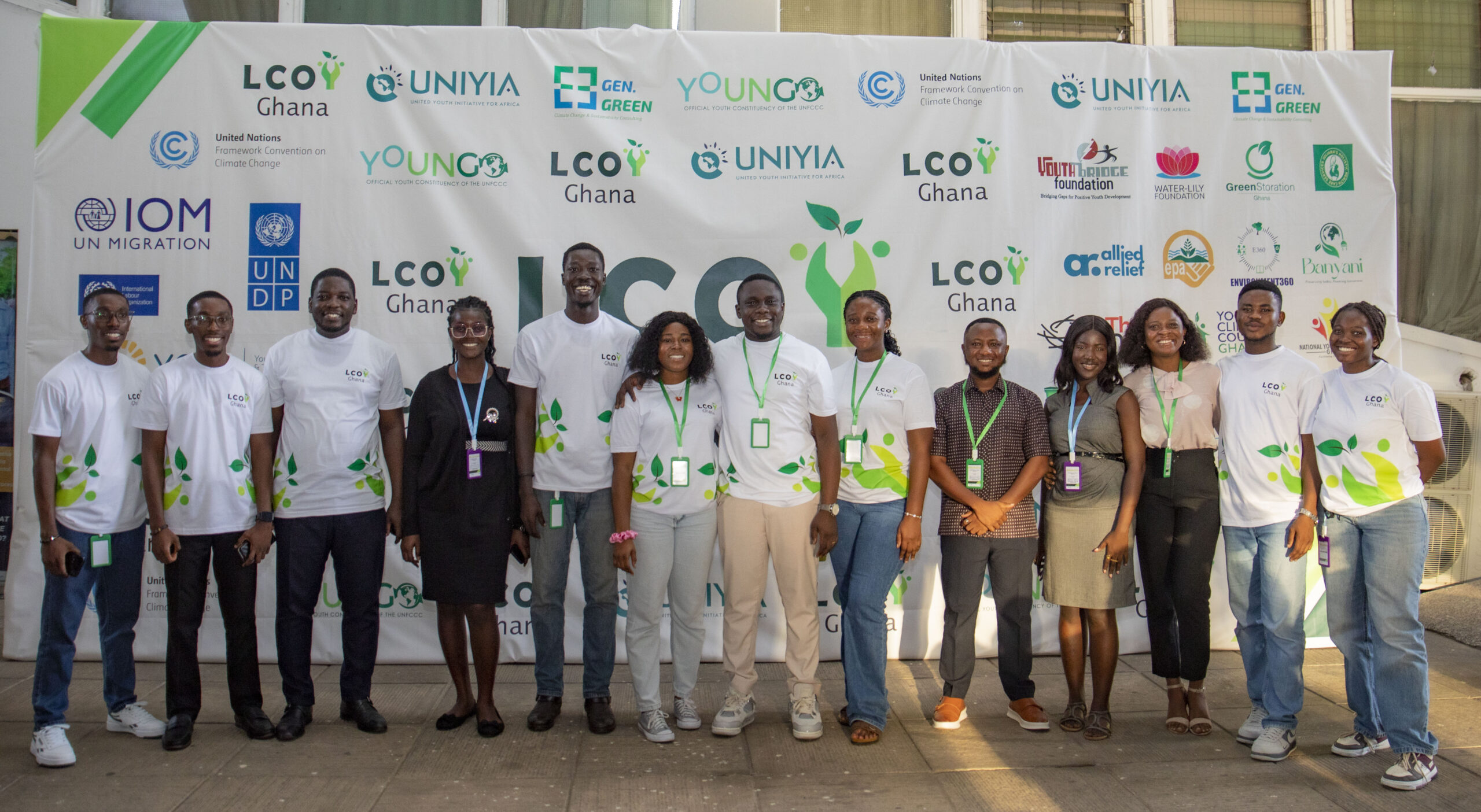
Accra, Ghana – On 19 September 2025, youth climate advocates, government representatives, policymakers, and experts converged at the University of Ghana Business School’s R.S. Amegashie Auditorium for the Local Conference of Youth (LCOY) Ghana 2025.
Under the theme “Review, Reset: Empowering Youth for Ghana’s Climate Future,” the gathering created a space for collaboration, knowledge exchange, and collective action, underscoring the role of young people as catalysts for climate solutions. For the second consecutive year, YOTA, through the Africa Youth Partnership on Climate Action (AYPCA), proudly supported the convening, furthering its mission to connect youth voices to both national and global climate agendas.
The day began with solidarity messages from partners, followed by an inspiring keynote address from Ms. Fatou Diallo Ndiaye, Chief of Mission for IOM Ghana, who challenged participants to think boldly about youth-led climate action.
One of the most significant milestones of the day was the launch of the Ghana Youth Climate Action Roadmap, a landmark framework designed to guide and unify youth participation in climate decision-making and implementation. This roadmap sets out priorities on adaptation, mitigation, and climate resilience while calling on young people to play their part as implementation partners.
Panel Highlights
Plenary discussions at LCOY Ghana 2025 explored how youth can move from advocacy to implementation, connect innovation with impact, and drive community-centered solutions. In the session on “Ghana’s NDC Review & Reset,” Nana Dr. Antwi-Boasiako Amoah of the EPA reminded participants that “we need to create awareness by engaging stakeholders before we can provide solutions.”
The theme of youth leadership and accountability carried through to the second plenary, where Nathan Agriwie of YOTA stressed that “we must strengthen the capacity of young people to secure funding, and as young people, we must remain transparent and accountable.” Complementing this, Emmanuella Manchaya Kalari of the Youth Climate Council noted that “youth are the most powerful translators of data and knowledge into action and impact.”
Further discussions highlighted community-driven solutions, with panelists from the Mountain Research Institute, Environment 360, and McKingtorch Africa demonstrating how indigenous knowledge and circular economy approaches can turn waste into wealth. The final plenary broadened the conversation to climate-induced mobility, skills, and smart agriculture, emphasizing the need to equip young people with green skills and adaptive livelihoods that secure Ghana’s climate future.
Youth Agenda and Breakout Sessions
Afternoon breakout sessions empowered delegates to go deeper into six thematic areas, including loss and damage, green jobs and climate finance, gender inclusion in climate policies, climate-smart agriculture, renewable energy and e-mobility, and the blue economy. These sessions culminated in the consolidation of action commitments that will form part of the National Youth Climate Agenda, ensuring youth-driven solutions influence policy and practice in Ghana.
Closing Commitment
LCOY Ghana 2025 closed with renewed energy and unity. As one participant noted, the conference was not only about dialogue but about resetting pathways for youth leadership in climate action. By the end of the day, delegates had built stronger networks, shaped the National Youth Agenda, and reinforced their readiness to carry Ghana’s voice to the global stage at COP30.