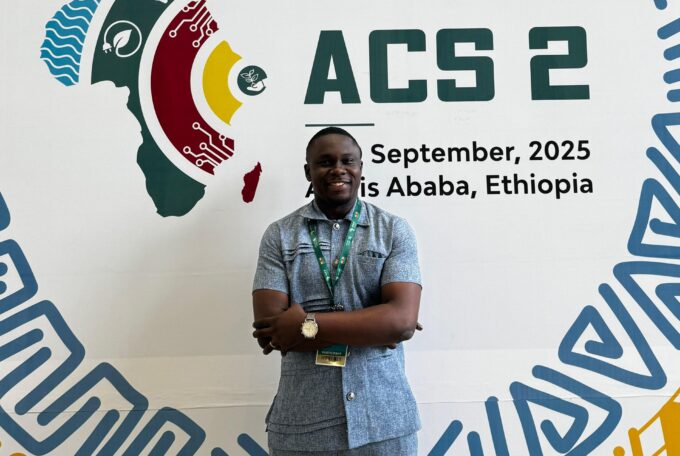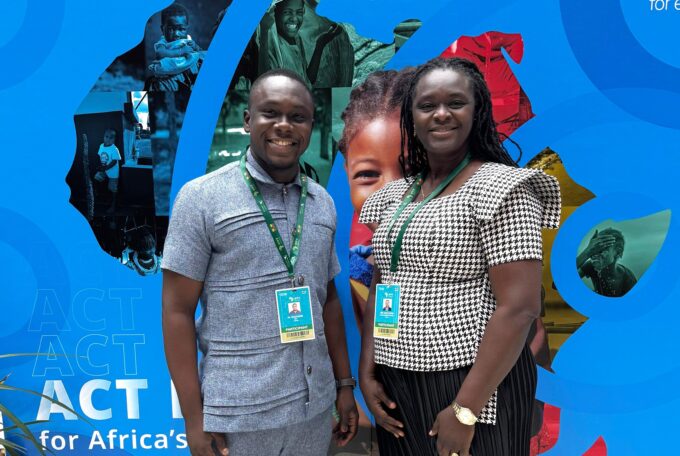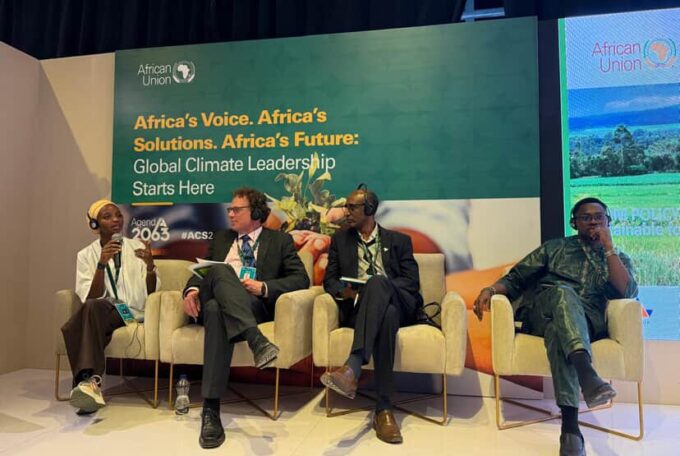
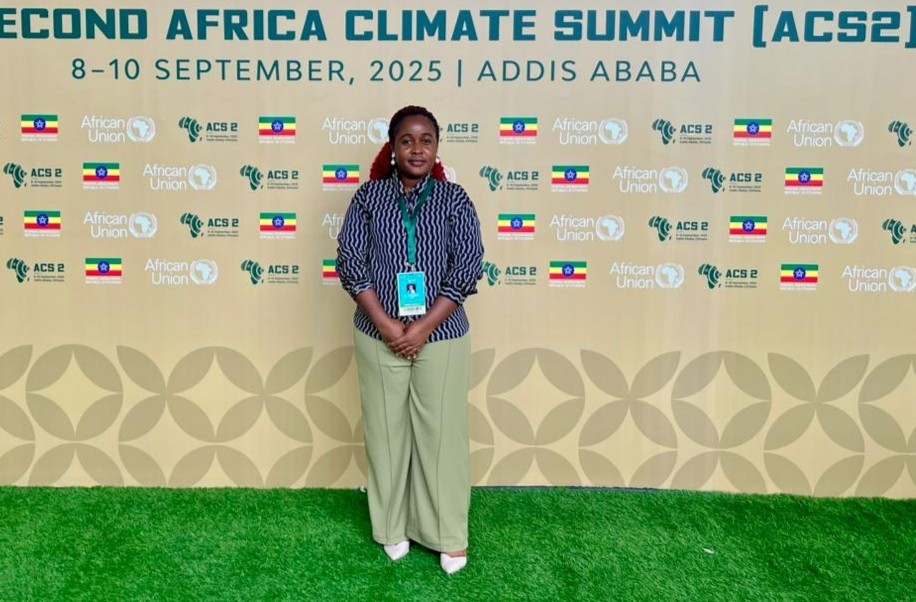
Attending the African Climate Summit 2 was more than just another conference experience. It was a deep reminder of how much potential Africa holds in shaping its own climate destiny. Over the first two days of the summit, I had the privilege of sitting in powerful rooms filled with policymakers, researchers, women leaders, and young innovators who are redefining what climate resilience means for our continent.
From women-led climate resilience to technological innovation and the newly introduced Tropical Forest Forever Facility (TFFF), every conversation seemed to circle back to one truth: Africa already has what it takes; we just need to lead with our own voice.
Day 1
One of my favorite sessions was organized by Pathfinder International, Ethiopia, on Women-Led Climate Resilience: Advancing the Leadership of Women and Girls Towards Better Health and Climate Change Resilience.
It was inspiring to see how African women, from farmers to policymakers, are already at the forefront of community adaptation.
Another key session hosted by the Organization of African First Ladies for Development (OAFLAD) echoed this sentiment. It highlighted how empowering women is not just a gender goal but a climate necessity. When women are equipped with the right tools and technology, entire communities benefit.
These discussions left me thinking about the women in rural Liberia who are already adapting in creative ways, innovating with local knowledge, managing small farms, and building resilience in silence. They are climate leaders too; they just need to be seen, supported, and scaled.
I also attended a thought-provoking event by CIFOR-ICRAF (Center for International Forestry Research and World Agroforestry) titled Rooted in Resilience. It focused on how locally led ecosystem restoration can transform communities and biodiversity across Africa. The message was clear: restoration efforts cannot be limited to short-term projects or pilot phases. They must be owned and led by the communities themselves.
That idea resonated deeply with me. Too often, we see well-intentioned projects fade after funding cycles end because the people on the ground were never given full ownership.
Day Two
Day two of the summit introduced one of the most exciting developments in forest finance, the Tropical Forest Forever Facility (TFFF), set to be officially launched at COP30 in Belém, Brazil.
This innovative mechanism aims to provide consistent payments to tropical forest countries for protecting their forests. What stood out to me most was its commitment to inclusion: 20% of the fund will directly support Indigenous Peoples and local communities.
Unlike short-term carbon schemes, TFFF is designed for long-term impact, with clear eligibility criteria, robust monitoring systems, and direct community access. For me, it represents the kind of financial justice that forest nations like those in West Africa have been waiting for.
At another session hosted by UNECA and partners, discussions centered on how South–South technological innovation can boost Africa’s climate resilience.
We explored ideas around indigenous technologies, innovative cooling systems, and the need for African-led research and solutions.
I was reminded that while global partnerships are vital, Africa’s solutions must come from Africa. Our youth, innovators, and researchers must take the lead, and that begins with building capacity, not dependency.
My Biggest Takeaways
If I were to summarize the key lessons from the summit, they would be:
- Ownership matters: Projects must outlive donor cycles by putting communities in charge.
- Africa can create its own climate solutions: We have the talent, the traditions, and the technology.
- Women and girls are leading innovation: Their involvement isn’t optional; it’s essential.
- Sustainable finance must be inclusive: Mechanisms like TFFF can help bridge long-term gaps.
- Co-creation is key: Adaptation should be built with people, not for them.
Looking Ahead
As I reflect on these two days, I’m more convinced that policy and practice must meet halfway. We can’t just talk about adaptation; we must fund it, localize it, and live it.
For Liberia, my hope is to see more community-based solutions, more women equipped with technology, and the establishment of a National Youth Delegate Program to amplify young voices at global forums like COP30.
The African Climate Summit 2 may have ended, but the work it inspired has only just begun.
And for me, it’s a reminder that the road to resilience is not built in boardrooms. It begins in our communities, where every tree planted, every woman empowered, and every youth included becomes part of Africa’s climate future. 🌱