West African Youth Set Out Grassroots Priorities for COP31
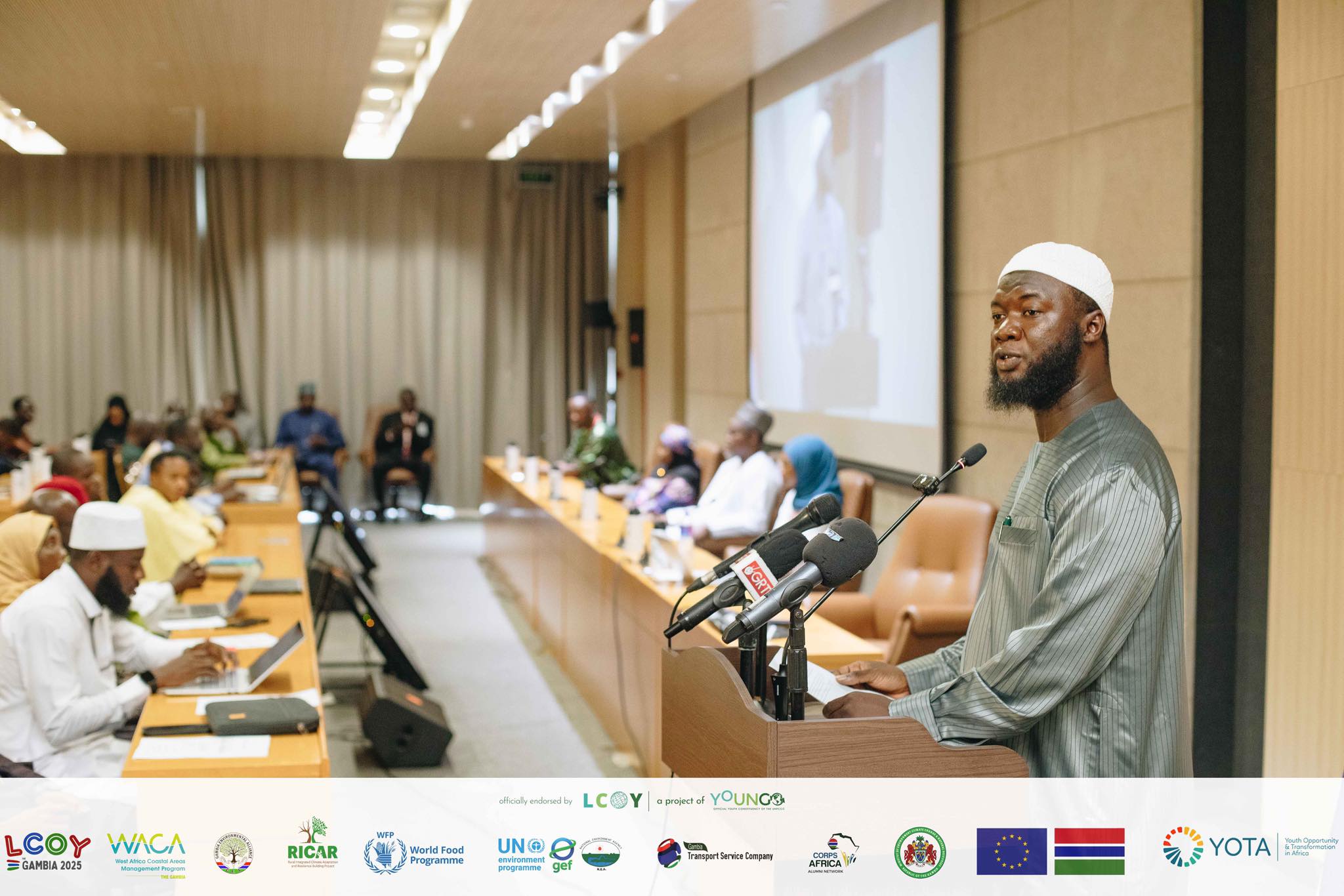
IMAGE CREDIT: LCOY Gambia 2025
Across six West African countries, Local Conferences of Youth (LCOYs) are translating community concerns into climate positions ahead of the 31st United Nations Climate Change Conference (COP31). Young people are pressing for finance that reaches local initiatives, stronger protection from climate impacts and a meaningful role in decisions.
As COP31 approaches, young people across West Africa are putting forward proposals grounded in the pressures facing their communities. Flooding, coastal erosion, insecure livelihoods and difficulties accessing finance are shaping what they want governments and international partners to deliver.
Through LCOYs, these concerns are becoming national statements, policy demands and commitments to act. The processes in The Gambia, Ghana, Liberia, Nigeria, Senegal and Sierra Leone offer a view of the priorities young people are advancing ahead of the climate summit in Antalya, Türkiye, from 9–20 November 2026.
Over the past three years, Youth Opportunity and Transformation in Africa (YOTA) has supported LCOYs in these six countries through the Africa Youth Partnership (AYP), funded by the Ford Foundation. This sustained engagement forms part of AYP’s wider work to strengthen youth organising and influence in climate policy, alongside national convenors and other partners.
The Gambia calls for finance and authority to act
The Gambia’s final 2026 National Youth Statement calls for a National Youth Climate Fund with a dedicated budget, accessible applications and support for developing proposals. It also demands a minimum 30% youth quota in national and local climate decision-making bodies, with authority to participate in decisions.
Its community priorities include coastal protection, early warnings, climate-resilient farming and reliable water and sanitation. The statement seeks support for people losing homes and livelihoods to climate impacts, expanded renewable energy and green vocational training. It also calls for tree-growing programmes with survival monitoring and community maintenance over at least five years.
The organising process connected these positions with practical action. The conference report records the planting of more than 40,000 mangrove propagules in Sanyang wetlands. Such work gives a local foundation to demands for funding and scaling community-led resilience.
Ghana demands fairer budgets and public accountability
At Ghana’s virtual LCOY on 22–23 August, co-convened by Starlight Foundation and Nalike Africa, delegates linked climate equity to the allocation of public resources. A published account of the adopted statement sets out a demand for at least 40% of the national adaptation budget to reach the Upper East, Upper West, Savannah and Northern regions, monitored through public community scorecards.
Other proposals include a US$5 million youth climate innovation fund and at least 30% youth representation on national climate decision-making bodies, including Ghana’s COP delegation. The statement also seeks recognition of indigenous knowledge in climate policy.
Delegates committed to monitoring climate spending, translating technical policies into local languages and expanding community solutions such as composting and clean energy. They also pledged a public review of progress within six months. These commitments give their COP31 advocacy a continuing role in domestic accountability.
Liberia links national commitments to community delivery
Liberia’s LCOY concluded on 28 August with an adopted National Youth Statement focused on implementing the country’s updated national climate commitments, its third nationally determined contribution (NDC 3.0). Organisers included Liberian Youth for Climate Actions and the Liberia Rural Women Organization for Climate Actions, with delegates from the country’s 15 counties.
According to reporting on the adopted statement, delegates called for annual youth-led reviews of implementation and US$500,000 by 2028 to operationalise a youth climate innovation fund. They urged stronger community responses to flooding, sea-level rise and illegal mining, climate education in schools, and support for climate-resilient agricultural cooperatives led by youth and women.
Signatory organisations also committed to at least 50% women’s representation in climate leadership roles. The positions connect international climate ambition with practical questions about who receives support and how communities can scrutinise delivery.
Nigeria builds its national position through regional consultation
Nigeria’s LCOY process has drawn on regional engagement ahead of its national gathering. South Saharan Social Development Organization documented a South-East regional LCOY, following outreach across Enugu, Abia, Ebonyi, Anambra and Imo. A public account of the North-East consultation also records contributions to the developing National Youth Statement.
The published agenda centred on implementing NDC 3.0, strengthening young people’s climate-finance capabilities and exploring uses of artificial intelligence in climate action. The national conference took place in Abuja on 5 November, with virtual participation available. Speaking there, ActionAid Nigeria called for climate finance that reaches young people and vulnerable communities, and for young people to help shape how NDC 3.0 is implemented.
Nigeria’s national youth statement had not been published at the time of writing. Regional consultation has nonetheless given young people outside Abuja a route to contribute local priorities to Nigeria’s preparations for COP31.
Senegal develops a youth agenda through 2030
Senegal’s LCOY on 8 and 10 October brought young people and children from all 14 regions into discussions on climate justice, finance and participation. The Club des Alumni de CorpsAfrica/Sénégal reports validation of the Pacte Jeunesse Climat Sénégal 2030, developed through national consultation and enriched by regional delegates.
Organisers describe the pact as an advocacy tool linking youth priorities with national and international engagement, with reciprocal commitments for young people, the state and partners. It provides a longer-term framework for carrying the agenda beyond COP31.
The gathering also connected policy discussion with community practice. At its solutions fair, Justdiggit presented farmer-managed natural regeneration and community-managed restoration from Senegal’s Groundnut Basin. These existing approaches illustrate the local knowledge and practical experience that youth climate organising can bring into wider debate.
Sierra Leone presses for direct finance and inclusive resilience
Sierra Leone’s published youth statement draws on consultations across five regions and contributions from more than 50 youth-led organisations, alongside other groups. It calls for a national youth climate fund offering simplified grants of roughly US$2,000–5,000, and for at least 30% of climate finance flowing to the country to be directly accessible to youth- and women-led organisations.
The statement seeks formal youth representation in climate governance and practical protection for exposed communities. Its proposals include warnings delivered through community radio, short message service (SMS) and WhatsApp, youth-led mangrove restoration and support for young farmers.
Disability inclusion and cultural heritage receive dedicated attention. The demands cover accessible warnings and shelters, representation for persons with disabilities, and recognition of threatened cultural heritage within loss and damage. These positions, refined through the October LCOY, show how community experience can make climate agendas more specific about who must be reached.
Carrying local priorities into COP31
Across these distinct processes, recurring concerns are visible: climate finance that communities can access, adaptation shaped by local realities, livelihoods in a changing economy and a stronger youth role in public decisions. The proposals differ by country, reflecting the communities and organising behind them.
LCOYs provide a route for these priorities to enter wider advocacy. As the United Nations Framework Convention on Climate Change (UNFCCC) explains, local and regional youth outputs contribute to the Conference of Youth and the Global Youth Statement, while also supporting advocacy within countries. The global statement is presented to the COP Presidency and UNFCCC Secretariat and used in engagement with governments.
The change already visible lies in young people organising around defined priorities, adopting positions and developing ways to pursue them. For AYP, sustained support for LCOYs helps connect that local organising with wider policy engagement. At COP31 and afterwards, the task is to secure responses to the proposals and follow what happens to finance, representation and implementation in the communities that shaped them.